When Dust and vibration are the Enemy: Protecting Mining and Materials Machinery from Premature Failure
This is an illustrative application case study based on typical operating challenges in the mining and materials sector. Performance and suitability depend on the specific application, operating conditions and engineering assessment.
Industry: Mining and materials machinery
Application: Crushers, screens, chippers and conveyors operating in a high-dust, high vibration environment
Products: FEY laminar sealing rings, SCHNORR® safety washers and disc springs, Fuji and Abis bearing lock nuts
Challenge: Contamination ingress, vibration-related loosening and repeated maintenance interventions
In an open pit mine or quarry, size does not guarantee strength.
In an industry dominated by large scale machinery, productivity can still depend on components small enough to fit in the palm of a hand.
For any operator, that lesson becomes impossible to ignore when that machinery begins experiencing repeated failures in some of its most demanding operating conditions.
The machinery works around the clock, exposed to clouds of abrasive dust. High temperatures, shock loads and constant vibration forms part of an ordinary shift. Maintenance teams are accustomed to tough conditions, but the frequency of interventions can begin to affect machine availability.
While visible failures appear in different places, their underlying causes, however, are closely connected.

The Challenge: Three Small Problems with One Large Consequence
The first warning signs appear around rotating equipment and bearing assemblies.
Fine mineral particles find their way towards sensitive components. Conventional sealing arrangements struggle against the combination of heat, dust and continuous shaft movement. Once contamination enters the assembly, lubricant condition deteriorates and wear accelerates.
Elsewhere on the machinery, fasteners exposed to persistent vibration require regular inspection and retightening. Even minor losses in clamping force can lead to movement between connected parts, increasing wear and placing additional stress on surrounding components.
Bearing retention presents a further concern. Repeated shock loading and vibration mean that the security of shaft-mounted assemblies cannot be left to chance.
None of these issues appears dramatic in isolation. Together, however, they create a familiar problem for industry operators: more maintenance, shorter service intervals and valuable machines spending too much time away from production.
The objective is clear:
Keep contamination out, maintain clamping force and secure critical rotating assemblies without making routine maintenance unnecessarily complicated.
Looking Beyond the Failed Component
Rather than treating each failure as an isolated replacement exercise, the IEC engineering team reviews the operating environment as a complete system.
IEC’s application-focused approach considers:
- Shaft speed and operating temperature
- The size and abrasive nature of airborne contamination
- Available installation space
- Static and dynamic loading
- Vibration severity
- Required clamping force
- Inspection and maintenance procedures
- Accessibility for component removal
This distinction mattered. In heavy machinery, replacing a failed part with an apparently similar component may restore operation temporarily. It does not necessarily remove the reason it failed.
The solution therefore combines several specialised mechanical components available through IEC, each addressing a different part of the problem.
The Solution
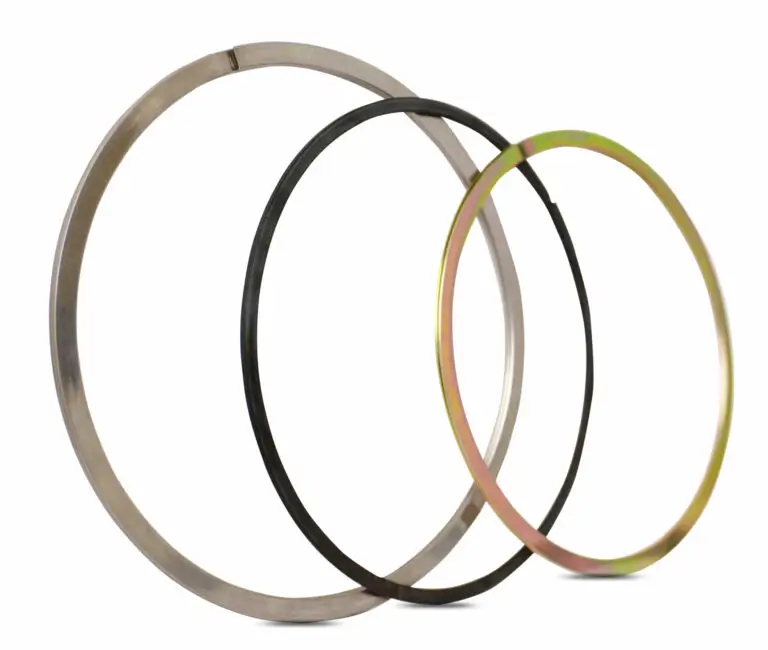
1. FEY Laminar Sealing Rings: A Metallic Barrier Against Dust
The existing sealing arrangement around selected rotating assemblies is reviewed first. FEY laminar sealing rings are specified to provide a robust metallic sealing solution in areas exposed to elevated temperatures and aggressive contamination.
Unlike sealing concepts that rely on a single vulnerable contact surface, laminar rings form a labyrinth-like restriction within the housing. This makes it difficult for dust and
other contaminants to reach the protected components while avoiding the friction associated with many contact seals.
For mining equipment, this offers several practical advantages:
- Resistance to high operating temperatures
- Protection against particulate ingress
- Low-friction performance around rotating shafts
- A compact installation profile
- Durable metallic construction for harsh environments
IEC regularly identifies laminar sealing rings as a solution for protecting shafts and bearings in demanding off-highway applications, where heat and particulate ingress can cause premature equipment damage. IEC’s off-highway engineering overview highlights how customised metallic sealing arrangements can help extend equipment life and service intervals.
2. SCHNORR® Safety Washers: Maintaining Security Under Vibration
Attention then turns to bolted joints located in high-vibration areas.
Standard fastening arrangements can gradually lose preload when exposed to repeated movement and shock. On mining machinery, where vibration is unavoidable, the fastening system must be designed for the environment rather than merely tightened harder. SCHNORR® safety washers are introduced at selected critical joints to help resist vibration-related loosening.
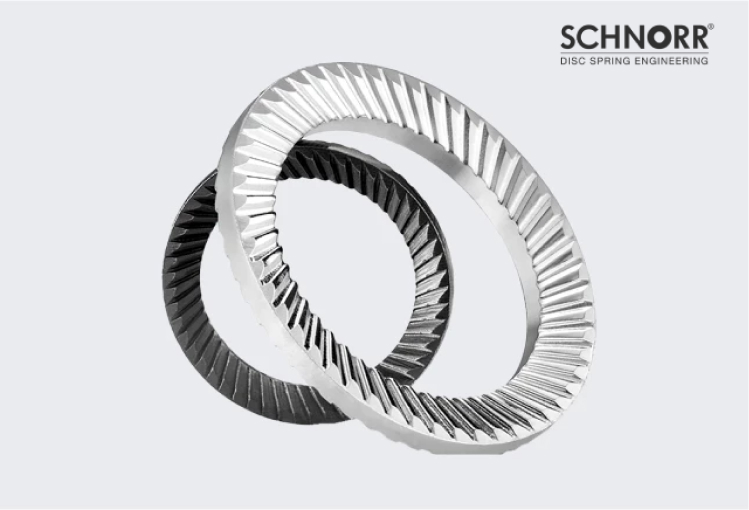
Their serrated profile allows the washer to engage with the mating surfaces while its conical form helps maintain tension in the joint. The result is a compact mechanical locking method suited to equipment that must remain secure but serviceable.
This is particularly important for maintenance crews. The objective is not to create a joint that can never be removed; it is to create one that remains secure in operation and can still be accessed using conventional tools during planned maintenance.
3. SCHNORR® Disc Springs: High Force in Limited Space
Assemblies may also require a more consistent way to maintain preload while accommodating movement caused by load changes, vibration and thermal effects. SCHNORR® disc springs provide high spring force within a relatively small installation space. Depending on the required force and deflection, individual springs can be arranged in series, parallel or combined stacks.
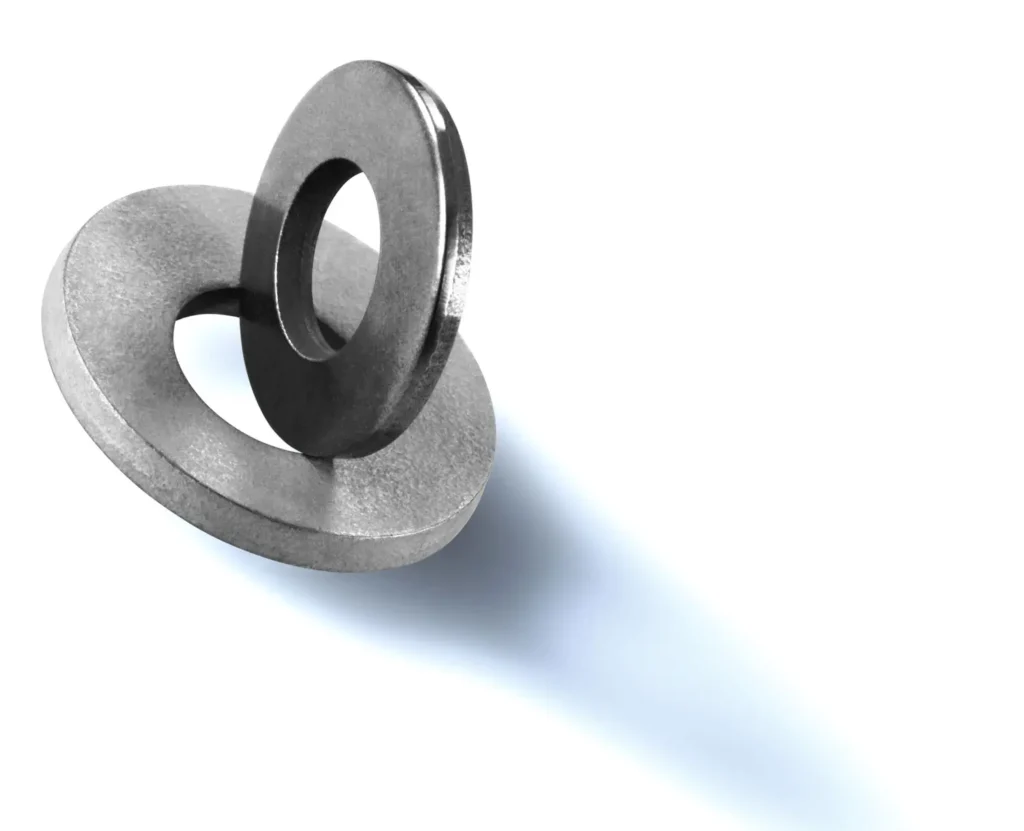
Their self-damping characteristics also make them well suited to shock absorption and energy dissipation, valuable qualities in machinery that spends its working life travelling over rough haul roads.
With support from IEC, the spring arrangement can be assessed according to load, deflection, space and anticipated cycle life rather than selected by dimensions alone.
4. Fuji Bearing Lock Nuts: Securing Critical Shaft Assemblies
Finally, Fuji bearing lock nuts are considered for shaft-mounted bearing assemblies where reliable retention is essential.
The objective is to help maintain the axial position and preload of the bearing arrangement despite continuous vibration and repeated shock loads.
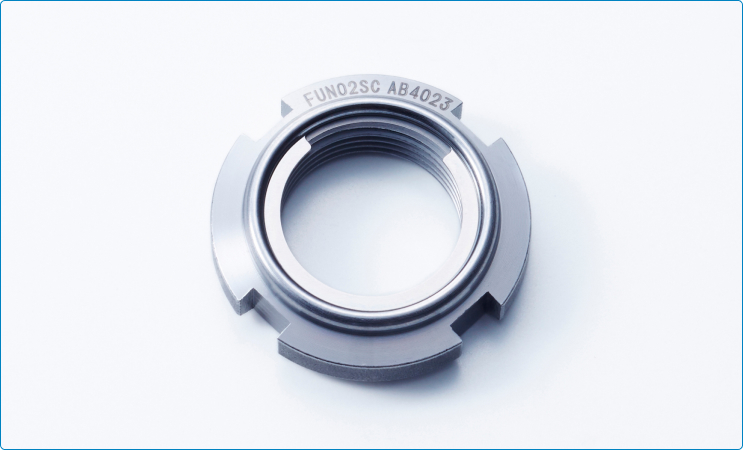
A secure bearing lock nut is a relatively small investment compared with the cost of movement within a critical shaft assembly. By improving retention at this point, the engineering team reduces the risk of secondary damage spreading through more expensive components.
The Outcome: More Time Moving Material
The redesigned arrangements address the failure mechanisms rather than simply replacing their consequences.
Improved sealing helps protect bearings and lubricated components from abrasive contamination. More secure fastening reduces the need for repeated retightening. Correctly selected disc spring arrangements help maintain preload, while reliable bearing retention supports the integrity of rotating assemblies.
For the operator, the most important result is not the performance of any single washer, ring, spring or nut.
It is the return of something far more valuable: predictable operation.
Maintenance can be planned with greater confidence. Components remain protected for longer, and engineers spend less time responding to avoidable problems in the field.
In mining and quarrying, productivity is often measured in tonnes moved per hour. But before material can move, the machinery must keep moving.
Sometimes, that depends on solving the smallest problems first.

Engineering for the Real Operating Environment
Heavy-duty machinery does not operate under catalogue conditions. It works in dust, heat, mud and vibration often under loads that change from one moment to the next.
IEC supplies precision-engineered vibration, sealing and rotating components for demanding industrial and off-highway applications. Its portfolio includes FEY laminar sealing rings, SCHNORR® disc springs, load washers and safety washers, Fuji bearing lock nuts, and specialist bearing solutions – a wider range than discussed above.
By combining component knowledge with application engineering, global sourcing and inventory planning, IEC helps manufacturers and operators select solutions around the conditions their machinery will actually face.
Because in this industry, reliability is not simply about building a bigger machine. It is about making sure every component, however small is ready for the job.
For more information contact us at [email protected]